"As an Amazon Associate I earn from qualifying purchases."
Music is a huge part of our day in my special education classroom. We use songs during morning meetings, transitions, movement breaks, and honestly – sometimes just because we need a little fun! Super Simple Songs have always been my favorite because they’re predictable, engaging, and naturally introduce so much functional vocabulary.
When I’m planning for my class, I’m always thinking about how I can make sure every student can participate.
Many of my students are nonspeaking or use Augmentative and Alternative Communication (AAC), so singing along doesn’t always look like traditional “singing.” Participation might look like pointing to a picture, making a choice, using AAC, signing, or imitating movements from the song.
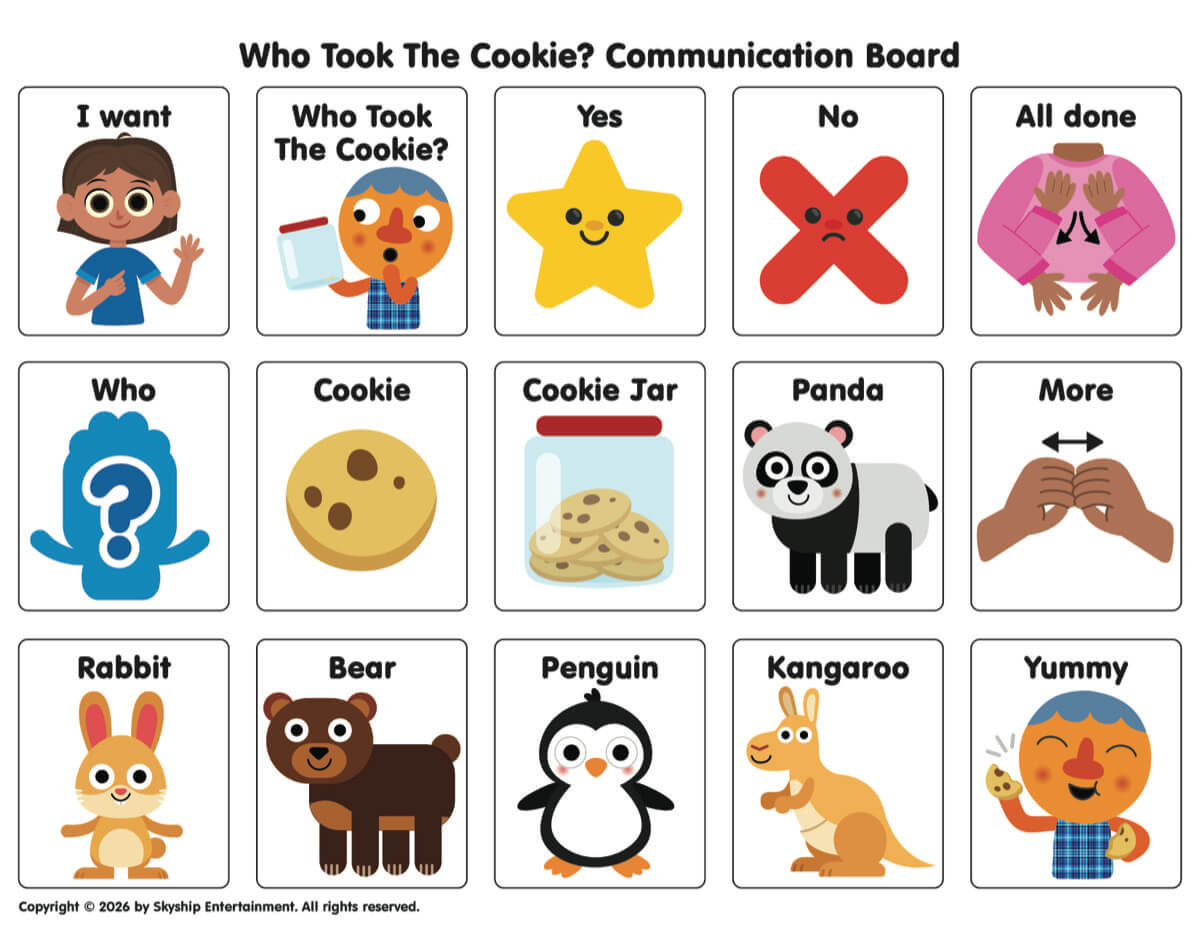
That’s what inspired these Super Simple communication boards! The Song Choice Board allows students to choose which song they want to hear, along with individual boards for some of our favorite songs. Each board includes core words such as I want, yes, no, more, and all done, as well as vocabulary specific to the song.
For example, while singing “The Wheels on the Bus,” students can point to bus, wheels, door, wipers, etc. as they hear the words. During “Old MacDonald Had a Farm,” we can model and identify the different farm animals throughout the song. The boards can be used alongside a student’s existing AAC system (not as a replacement for it) to give students another way to interact with the activity.
Modeling is such an important part of building communication. As we sing, the adults in the room can point to the corresponding pictures, model words like more, all done, yes, and no, and show students how they can use the board to make choices or participate in the song. Over time, students can begin to learn that those pictures have meaning and that they can use them to communicate with the people around them.
I also love that these boards give us opportunities to model communication without putting pressure on a student to respond or use the board in a specific way. A student might point to bus as we sing, request more when the song ends, choose the next song, or simply watch as an adult models the vocabulary. Participation looks different for everyone. The goal is to give every student access to communication, choice, and connection during an activity their classmates are enjoying too.

About the author
Melissa is a special education teacher in a K-1 self-contained autism classroom. She is passionate about creating an accessible classroom where every student has meaningful opportunities to communicate, participate, and build independence. Through her social media, Melissa shares practical strategies, visual supports, teacher resources, and an authentic look behind the scenes of special education. Her goal is to help other educators create structured, compassionate, and neurodiversity-affirming classrooms where all students can thrive.